
Remote Python/Scala engineer jobs
We, at Turing, are looking for highly-skilled remote Python/Scala engineers who will be responsible for programming and software development using Python and Scala programming languages and related tools and frameworks. Get a chance to work with top U.S. companies and accelerate your career.
Find remote software jobs with hundreds of Turing clients
Job description
Job responsibilities
- Collaborate with different users and engineering teams to develop new programming methods
- Write clean, testable, effective Python/Scala code
- Participate in interpreting architecture and design, code reviews
- Contribute to developing new functionalities based on end-user requirements
- Analyze the risk report and visualize requirements to find solutions
- Make software modifications from supplied requirements and specifications by software architectures
- Ensure adherence to programming and documentation policies, software development best practices, testing and release
Minimum requirements
- Bachelor’s/Master’s degree in Engineering, Computer Science, IT (or equivalent experience)
- 3+ years of experience working as a Python/Scala developer (rare exceptions for highly skilled developers)
- Extensive experience with Python, Scala, and Spark
- Proficiency with Python Django frameworks
- Experience in handling large sets of complex data from different sources and databases
- Solid grasp of database engineering and design principles
- Strong knowledge of Java, Spark, PySpark, Python, API development and RESTful web services
- Skilled at setting up and executing automated functional, UI and load/performance tests
- Experience working with NoSQL databases/indexers, like MongoDB, Cassandra, Elasticsearch etc.
- Fluency in English language for effective communication
- Ability to work full-time (40 hours/week) with a 4 hour overlap with US time zones
Preferred skills
- Familiarity with CI/CD methods
- Proficiency in RDBMS development (e.g. Oracle) & SQL skills
- Knowledge of ETL tools including Informatica, Talend, Matillion, etc.
- Understanding of service patterns and protocols like Web Services, API, REST, RPC
- Familiarity with DevOps and Agile software development methods
- Excellent problem-solving and analytical skills
Interested in this job?
Apply to Turing today.
Why join Turing?

1Elite US Jobs
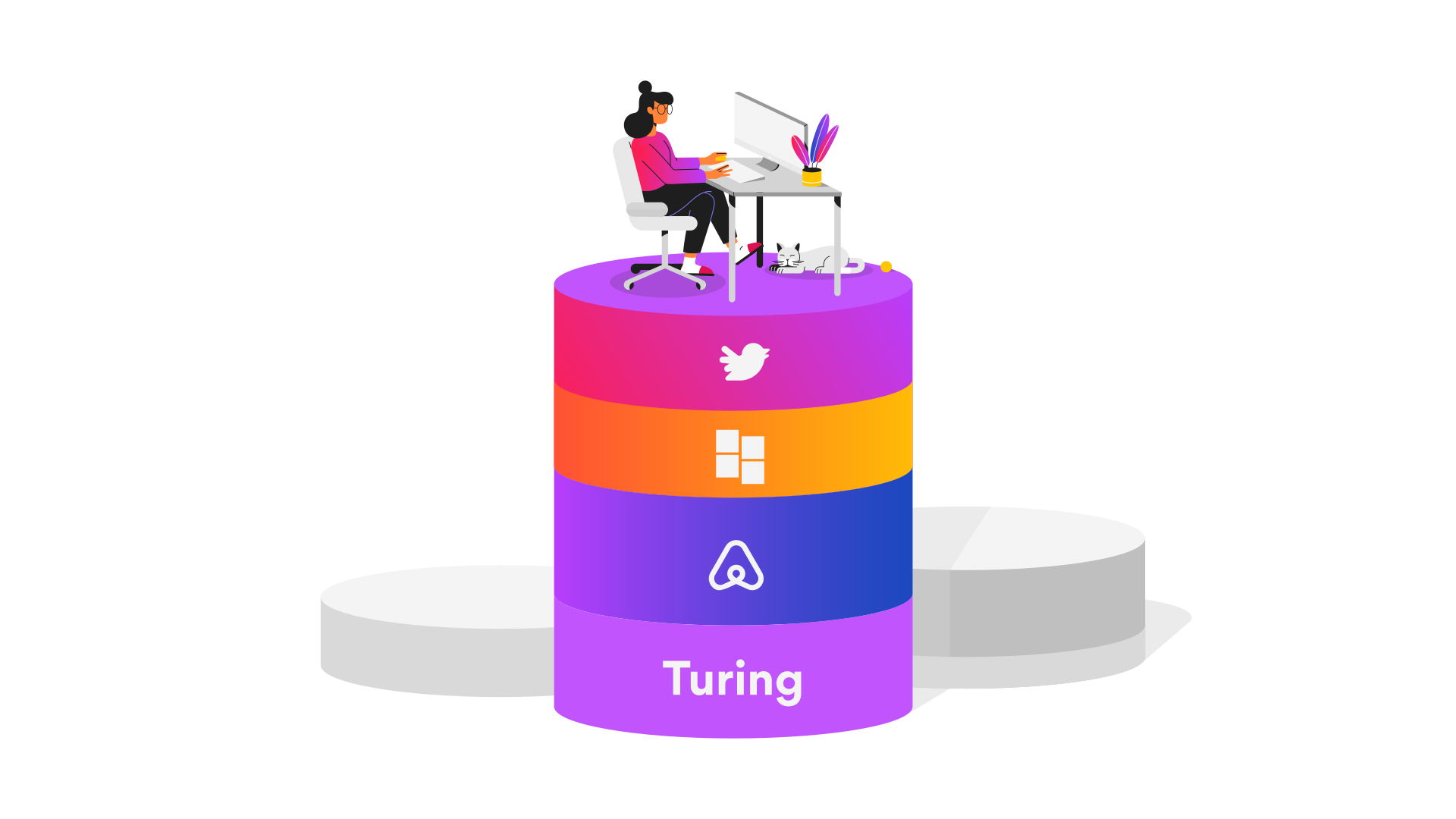
2Career Growth

3Developer success support







How to become a Turing developer?
Create your profile
Fill in your basic details - Name, location, skills, salary, & experience.
Take our tests and interviews
Solve questions and appear for technical interview.
Receive job offers
Get matched with the best US and Silicon Valley companies.
Start working on your dream job
Once you join Turing, you’ll never have to apply for another job.

How to become a remote Python/Scala developer?
Expertise in languages like Scala and Python can help developers to scale their ranks in the software industry. Both languages can help to build solutions that can exceed current standards and offer a usable and performant solution. But to get hired as a Python/Scala engineer, a certain set of skills is essential. In the present software development industry, few languages can match the popularity of Scala. The language is used by developers around the world and seems to fit requirements for various niches. Scala is a strongly statically typed language programming language offering support for both object-oriented programming and functional programming requirements. It is also a concise language and can efficiently address the shortcomings of Java. The language is widely used for services like data processing, distributed computing, and also for web development.
Python is also one of the most popular languages implemented in the current software development industry. It is a high-level general-purpose language built with a design philosophy emphasizing code readability. Python as a language can support projects of almost every niche and help build websites and software, automate tasks, and conduct data analysis. The language is also highly efficient for developing data-driven applications. The language is easy to master as it uses simple syntaxes with emphasis on readability and has been proven to help reduce the cost of program maintenance. The language also offers support for modules and packages which also helps developers to reuse code. Based on such benefits, Python as a language has become one of the most popular languages in the current industry.
What is the scope of Python/Scala development?
With the world of tech and business growing more reliant on data-driven solutions, languages like Python and Scala have become extremely popular. Both languages are in use for a significant amount of time and are considered as defining skills for developers. The languages have not only gained popularity but have also managed to become a preferred choice for many developers around the world.
As a developer, the ability to develop solutions based on Python or Scala can aid your professional aspirations. Built to support modern data-driven development processes, it can potentially open up new and exciting career opportunities. As a matter of fact, companies actively search for experienced Python/Scala developers capable of driving projects.
So for developers with expertise in the languages, the future can be full of new opportunities. Having a deep understanding and innovative approaches to utilizing the languages can allow developers to build solutions fit for the constantly evolving industry.
What are the responsibilities and roles of a Python/Scala developer?
If you wish to work and define your career as a Python/Scala, it is essential to know the basic set of responsibilities for the role. When hired for such roles, you might need to contribute to various processes associated with a new or ongoing project. Some of the daily responsibilities will include tasks like writing codes on Python and Scala while also assisting to perform code review to maintain quality standards. When hired you also would be excepted to help construct new functionalities based on feedback and new requirements. You can go through the list below to get a detailed understanding of the various responsibilities of a Python/Scala developer.
- Expertise in working with Python, Scala, and Spark
- Deep understanding of Python Django frameworks
- Experience working with NoSQL databases/indexers, like MongoDB, Cassandra, Elasticsearch, etc
- Solid grasp of database engineering and design principles
- Strong knowledge of Java, Spark, PySpark, Python, API development, and RESTful web services
- Skilled at setting up and executing automated functional, UI, and load/performance tests
- Understanding service patterns and protocols like Web Services, API, REST, RPC
- DevOps and Agile software development
How to become a Python/Scala developer?
If you’re interested in becoming a professional Python/Scala developer at top tech organizations, you need to possess a certain set of expertise. You need to possess a thorough understanding of essential solutions and technologies closely related to Scala/Python-based projects. Most companies prefer to bring in developers with proven professional experience to ensure product quality. Along with the basic technical skills, as a developer, you should constantly keep upscaling your knowledge to contribute to new and evolving customer-facing projects. To find success in the role, knowledge of modern data-driven solutions and services should also be helpful.
Along with technical proficiency, a degree in Computer Science or related fields should also help you to become a Python/Scala developer. While a technical degree is not mandatory to become a Python/Scala developer, having makes the process simpler by increasing chances of getting hired. For more information related to the requirements of the role, you can go through the following section.
Interested in remote Python/Scala developer jobs?
Become a Turing developer!
Skills required to become a Python/Scala developer
In order to build a successful career as a Python/Scala developer, developers need to possess expertise in working with technologies. To work as a Python/Scala developer you'll need to develop capabilities of working with
1. Python
One of the primary requirements to become and get hired in such a role is a strong grasp of the Python language. Companies these days prefer to hire Python experts with proven professional experience of working with the technology and building modern business-oriented solutions. You also need to consistently upgrade your knowledge about Python development and stay updated with the latest developments in data-driven approaches. The modern world of business is managed by data-driven strategies to take better and more informed decisions. So, if you wish to work at top tech firms in roles, keep increasing your Python development knowledge from time to time.
2. Scala
A thorough understanding of Scala will also help you to get hired for such positions in the industry. The language is well known for its versatility and offers support for various product niches. As a programming language, Scala offers plenty of benefits, including support for both object-oriented and functional programming. Scala is a pretty concise language and is often used to tackle the shortcomings of Java. Often deployed to set up services like data processing and distributed computing, Scala has emerged as a high-value technology for the modern environment. Over the years of being in use, Scala has become a preferred choice for many around the world with growing popularity. So, if you aim of becoming a successful Python/Scala developer, keep improving your understanding of the language.
3. Java
The ability to work on Java is also an essential requirement to be an expert Python/Scala developer. Java is one of the most popularly used programming languages capable of supporting projects of several niches in the software development industry. The language has been in use for more than a decade and become a preferred choice of developers. One of the biggest advantages of working with the language is the ability to write and run codes anywhere irrespective of the architecture of the system. The language can help with almost every requirement for modern software development projects including cross-platform services. The language is also well known for its advantages like the option of compiling codes on any platform supporting Java Runtime Environment. So, in order to improve your chances of getting hired as a Python/Scala developer, keep improving your Java knowledge with time.
4. API
In the current software development landscape, few resources are as important as APIs. Integrated for developing applications for a variety of industries, it offers a lot of versatility to developers. The use of APIs has been proven to be efficient in improving the productivity of teams. It offers a streamlined platform to improve connectivity and collaboration among the developers. But one of the biggest addresses of using such resources is the option to set up data pipelines to find new trends and revenue funnels. Such features make the APIs a must-have skill for modern software and web development processes.
5. Interpersonal skills
Working in the modern software development industry requires a lot more than technical proficiency. Developers today need to undertake various responsibilities outside their core competencies. They often also need to collaborate with different cross-functional teams and interact with clients to produce high-quality software. For which, interpersonal skills play a huge part in today’s agile work culture. Developers need to actively interact and share their opinion from time to time to keep the chain of information flowing. So to find success working as a back-end integrations engineer, brushing up on language skills and openness to collaborate has become essential.
Interested in remote Python/Scala developer jobs?
Become a Turing developer!
How to get hired as a remote Python/Scala developer?
Companies today prefer to work with professionals with a deep understanding of important technologies. For which constantly upgrading personal tech stack and developing knowledge of various domains has become essential. In addition to core technologies required for Python/Scala development, developers also need to have a clear idea about user preferences. This allows developers to build entire applications and front-ends drawing inspiration from preferred features. The primary objective of any back-end integrations engineer is to build efficient solutions that offer class-apart user experience using intuitive interfaces.
Turing has quickly become the premier platform for taking careers forward working as a remote Python/Scala developer. We provide developers opportunities to work on era-defining projects and business problems using state-of-the-art technologies. Join the fastest growing network of the top developers around the globe to get hired as a full-time and long-term remote Python/Scala developer with the best pay packages.
Why become a Python/Scala developer at Turing?

Elite US Python/Scala developer jobs

Career growth

Exclusive developer community

Once you join Turing, you'll never have to apply for another jobs

Work from the comfort of your home

Great compensation
How much does Turing pay their Python/Scala developer?
Every Python/Scala developer at Turing can set their own pricing. Turing, on the other hand, will recommend a salary to the Python/Scala developer for which we are confident of finding a fruitful and long-term opportunity for you. Our salary recommendations are based on an analysis of market conditions as well as customer demand.
Frequently Asked Questions
Latest posts from Turing



Leadership
Equal Opportunity Policy
Explore remote developer jobs
Based on your skills
- React/Node
- React.js
- Node.js
- AWS
- JavaScript

- Python

- Python/React
- Typescript

- Java
- PostgreSQL

- React Native
- PHP
- PHP/Laravel

- Golang
- Ruby on Rails

- Angular
- Android

- iOS

- AI/ML

- Angular/Node
- Laravel
- MySQL

- ASP .NET

Based on your role
- Full-stack
- Back-end
- Front-end
- DevOps
- Mobile

- Data Engineer

- Business Analyst
- Data Scientist
- ML Scientist

- ML Engineer

Based on your career trajectory
- Software Engineer
- Software Developer
- Senior Engineer
- Software Architect
- Senior Architect
- Tech Lead Manager
- VP of Software Engineering