
Remote GraphQL developers jobs at U.S. companies
We, at Turing, are looking for talented remote GraphQL developers who have a proven track record of designing and implementing reliable, low-latency, and highly performant applications. You’ll be working with top U.S companies & developing highly efficient UI components.
Find remote software jobs with hundreds of Turing clients
Job description
Job responsibilities
- Write clean, efficient, and reusable code
- Work with cross-functional teams to design, develop, review & test applications
- Participate in all aspects throughout the entire product lifecycle
- Proactively learn & apply new technologies, best design practices & usability patterns
Minimum requirements
- Bachelor’s/Master’s degree in Computer Science (or equivalent experience)
- 3+ years of experience working with GraphQL (rare exceptions for highly skilled candidates)
- Skilled at building GraphQL APIs
- Good communication and interpersonal skills
- Keen to learn and willing to take ownership of work items
- Ability to understand business requirements & translate them into technical requirements
- Strong knowledge of data structures and algorithms
Preferred skills
- Knowledge of distributed systems, algorithm optimization & large scale systems design
- Ability to troubleshoot distributed systems
- Comfortable working with CSS, SCSS, etc. is nice to have
- Experience in AWS, DevOps, monitoring, and alerting is nice to have
Interested in this job?
Apply to Turing today.
Why join Turing?

1Elite US Jobs
2Career Growth

3Developer success support







How to become a Turing developer?
Create your profile
Fill in your basic details - Name, location, skills, salary, & experience.
Take our tests and interviews
Solve questions and appear for technical interview.
Receive job offers
Get matched with the best US and Silicon Valley companies.
Start working on your dream job
Once you join Turing, you’ll never have to apply for another job.

Learn how to create a perfect resume
Turing.com lists out the do’s and don’ts behind a great resume
to help you find a top remote GraphQL developer job.

How to become a GraphQL developer?
GraphQL is a query language and server-side runtime for application programming interfaces (APIs) that focuses on providing clients with only the information they need. GraphQL was created with the goal of making APIs that are quick, versatile, and developer-friendly. It can even be used within the GraphiQL integrated development environment (IDE). GraphQL, a REST alternative, allows developers to create requests that pull data from various sources in a single API call. Developers can use any approach they want to create APIs, and the GraphQL standard will ensure that they work consistently for clients.
What is the scope in GraphQL development?
GraphQL is dominating the full-stack world. GraphQL is a language-independent specification for client-server communication, in case you didn't know. It allows you to represent a server's resources and processes using a domain-specific language (DSL). Clients can use it to transmit batch scripts written in your DSL to the server, which the server will process and respond to. GraphQL isn't simply gaining popularity among React developers. GraphQL has piqued the curiosity of Angular, iOS, and Android developers alike. Its popularity is skyrocketing, and for good reason: GraphQL addresses some very real issues that developers face on a daily basis. That's why it's being adopted by firms like Twitter, Intuit, and Drupal.
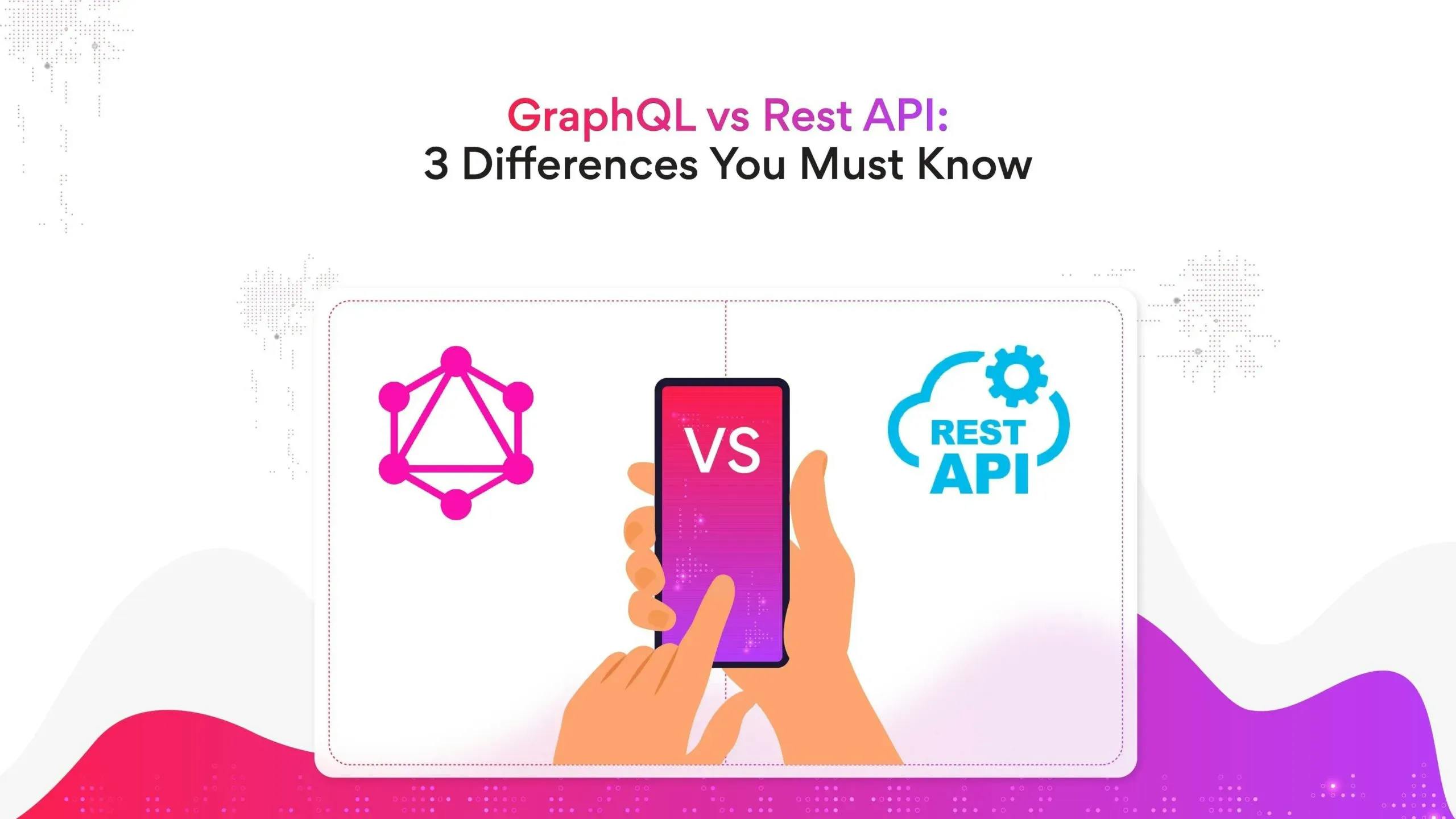
GraphQL is already a huge step forward from REST API design. It more accurately depicts the kind of data paths that a client must execute in order to complete its task.
What are the roles and responsibilities of a GraphQL developer?
Developers use GraphQL to generate schemas that show potential data and metadata for client queries. There are several different types of defining object types in Schema. These object types are intended to assist clients in obtaining field specific information. The queries are checked by GraphQL by comparing them to the schemas. As a result, an API developer must attach attributes to the schema, which are referred to as Resolver. By generating values, Resolver aids in execution. GraphQL allows for data storage and flow flexibility. GraphQL just specifies and validates the APIs' syntax.
In a GraphQL developer job, the developer is in charge of designing, building, and maintaining a GraphQL interface. Queries are a distinguishing feature, and developers are responsible for their upkeep and resolution. To hire developers, various firms require aided or additional software tools, expertise, and experience. As a result, the job can be split between integrated technologies that use GraphQL. The following are examples of roles:
- As a GraphQL developer you will create apps and service integrations.
- Participate in support activities with UI developers for API / service integration.
- Following standard practises and converting designs and wireframes into high-quality code are essential.
- Being a part of the project creation process from beginning to end. Assuring that the projects are both technically and visually sound.
- Assist with project scoping, estimating, and planning. Understanding and learning about user interactions, as well as remaining current on new technology.
- Participating in the design of the architecture, APIs, and data models.
- Components and tools are regulated to increase utility across a wide range of devices and browsers.
- Coordinating with different teams that are working on different layers.
- Bugs/customer issues to be located, investigated, and resolved.
How to become a GraphQL developer?
You'll need to understand two basic web development ideas to get a GraphQL developer job: the front-end and the back-end. All of the aspects of a computer application that consumers engage with directly are referred to as the front-end, also known as client-side or customer-facing side. The back-end, on the other hand, includes all of the behind-the-scenes software that computes business logic, responds to user requests, and retains sensitive data indefinitely. Consider the front-end to be the tip of an iceberg, with the bulk of the back-end hidden beneath the water's surface.
Front-end developers make visible sections of a website responsive to diverse viewing contexts, such as smartphones, tablets, and desktops, by creating and optimising visible parts of a website. To create an interesting site, they use client-facing programming languages like HTML, CSS, and JavaScript. Back-end development, on the other hand, necessitates programmers creating and refining the internal software that runs a company's databases, servers, and proprietary software. Back-end developers are in charge of developing the channels through which information is delivered to and from users of front-end interfaces.
A bachelor's or master's degree in computer science or a related field is required. This is true for several reasons: first, having a relevant academic background allows you to gain a better understanding of computer programming and web development, which will substantially assist you in learning GraphQL development. Second, in GraphQL developer jobs, many companies require you to have a specific degree, making it easier for you to find fulfilling career opportunities. After you've gained enough confidence in your skills, make sure you've crafted a beautiful GraphQL developer resume that will help you in many ways later on.
Interested in remote GraphQL developer jobs?
Become a Turing developer!
Skills required to become a GraphQL developer
The first step is to gain the core skills that will help you land high-paying GraphQL developer jobs. Let's take a look at what you should be aware of.
1. Familiarity with Java microservices
Java microservices are a collection of software applications written in the Java programming language. The microservices are created for a specific purpose and work together to produce a larger solution. As the name implies, each microservice has very limited capabilities in order to provide a highly modularized overall design.
2. Proficiency in XML and JS
Web services rely heavily on XML as a foundation. To get the most out of XML, it can be combined with a variety of client and server-side languages. Aspiring GraphQL developers should understand how to work with XML and client-side JavaScript. They must understand how to use JavaScript to show the contents of an XML file, including how to access child elements, manipulate elements, and so on.
3. Understanding of Apollo Client
Apollo Client is a JavaScript state management framework that allows you to use GraphQL to handle both local and remote data. It can be used to fetch, cache, and alter application data while also updating your user interface. Apollo Client enables you to structure code in a way that is cost-effective, predictable, and declarative, in line with modern development techniques. React is built-in to the core @apollo/client library, while the greater Apollo community maintains integrations for other popular view layers.
4. High-proficiency in front-end languages
The front-end of a website or software programme is the user interface through which users complete important operations. When a person accesses an app or browser, they can access several parts and features. Any website or application front-end has programming that allows users to access particular features. The languages used for Front-end development are HTML, CSS, and JavaScript. Front-end developers provide the structure, appearance, behaviour, and content of everything that appears on browser displays when websites, online applications, or mobile apps are opened. Therefore, the aspiring GraphQL developers need to be familiar with popular front-end languages.
5. Knowledge of frameworks
You don't have to start from scratch as a programmer when you have tools to assist you with your tasks. Frameworks are pieces of software that developers create and utilise to create applications. Software frameworks are diverse, durable, and efficient because they are frequently produced, tested, and optimised by a team of skilled software engineers and programmers. Developing apps with a software framework allows you to concentrate on the application's high-level functionality. This is because the framework handles all of the low-level functionality. This is why GraphQL developers should familiarise themselves with frameworks.
Interested in remote GraphQL developer jobs
Become a Turing developer!
How to get remote GraphQL developer jobs?
Developers are very similar to athletes. To excel at their craft, they need to practice effectively and consistently. They also have to work hard enough so that their skills gradually grow over time. In this regard, there are two main factors that developers need to focus on for this breakthrough to happen: the support of someone who has more experience and more effective techniques in the field while you practice. As a developer, it is important that you know how much to practice. So, make sure someone is available to help and watch for signs of burnout!
Turing has the greatest remote GraphQL developer jobs that are tailored to your professional goals as a GraphQL developer. Working on difficult technological and business problems with cutting-edge technologies will help you grow quickly. Get a full-time, long-term remote GraphQL developer job with greater income and career progression by joining a network of the world's greatest developers.
Why become a GraphQL developer at Turing?

Elite US jobs
Long-term opportunities to work for amazing, mission-driven US companies with great compensation.

Career growth
Work on challenging technical and business problems using cutting-edge technology to accelerate your career growth.

Exclusive developer community
Join a worldwide community of elite software developers.

Once you join Turing, you’ll never have to apply for another job.
Turing's commitments are long-term and full-time. As one project draws to a close, our team gets to work identifying the next one for you in a matter of weeks.

Work from the comfort of your home
Turing allows you to work according to your convenience. We have flexible working hours and you can work for top US firms from the comfort of your home.

Great compensation
Working with top US corporations, Turing developers make more than the standard market pay in most nations.
How much does Turing pay their GraphQL developers?
Every GraphQL developer can set their own rate at Turing. Turing, on the other hand, will suggest a pay at which we are confident we will be able to find you a rewarding and long-term position. Our suggestions are based on our analysis of market dynamics and customer desire.
Frequently Asked Questions
Latest posts from Turing



Leadership
Equal Opportunity Policy
Explore remote developer jobs
Based on your skills
- React/Node
- React.js
- Node.js
- AWS
- JavaScript

- Python

- Python/React
- Typescript

- Java
- PostgreSQL

- React Native
- PHP
- PHP/Laravel

- Golang
- Ruby on Rails

- Angular
- Android

- iOS

- AI/ML

- Angular/Node
- Laravel
- MySQL

- ASP .NET

Based on your role
- Full-stack
- Back-end
- Front-end
- DevOps
- Mobile

- Data Engineer

- Business Analyst
- Data Scientist
- ML Scientist

- ML Engineer

Based on your career trajectory
- Software Engineer
- Software Developer
- Senior Engineer
- Software Architect
- Senior Architect
- Tech Lead Manager
- VP of Software Engineering